
Who's fit to teach?
Mar 27, 2016
An 8-minute read
Not so long ago, there was a debate on Twitter about what makes someone suitable to teach physiotherapy courses. Needless to say, there were some strong opinions and a few heated exchanges.
However, I thought I would let the dust settle a bit, then expand on some of the points raised and add some of my own thoughts to the age-old question of... 'who's fit to teach.'
First things first, a declaration of my bias and conflict of interest. I teach a course on simplifying painful shoulder issues that tries to cut through the clutter, confusion, and crap that is out there, and I earn an income from it, so obviously, my views and opinions are going to be biased here, so please consider this!
Greed and Ego!
So this debate started due to some comments made about how there seem to be more and more postgraduate courses recently, and how it appears that many of these are more for the tutors' benefit to earn money and see the world.
And I agree. I earn money and see the world teaching my courses. And I have also noticed a surge in the number of courses being provided recently, and having been on many courses myself, I can say they vary massively in quality and content.
There are now courses on everything from manual therapy to exercise therapy, from taping to needling, from psychology to physiology. There are courses for paediatrics and geriatrics, and everything in between. There are courses for tendons, joints, fascia, skin, nerves, backs, hips, knees, and of course, shoulders. This choice is endless.
This vast amount and choice clearly reflects a need and a market for postgraduate courses, with hungry, keen, eager minds wanting more information and knowledge. However, with no official regulation or even minimum standard for these courses, there can be a high degree of variability in content and quality.
Personally, I am still amazed that there are no formal accreditation procedures or regulatory bodies in the UK for postgraduate physiotherapy courses. The idea that any Tom, Dick, or Adam can just 'do' a postgraduate course without the content being checked, reviewed, or assessed by peers both concerns and worries me.
In my opinion, all courses, including mine, should be scrutinised regularly to ensure the content is up to date, the interpretation is on track, and the tutors' biases are kept in check.
Becuase I have been on many postgraduate courses over the years, spending thousands of pounds in the process, eager to learn and keen develop my skills to help my patients, only to be hugely disappointed with the quality and content.
In fact, I wrote about this as one of my first blogs nearly four years ago.
Now, some of my views and opinions, as well as my writing style, have changed a little since that blog, but I do still think the world of postgraduate training is rife with greed, marketing, and personal egos.
In fact, I actually think this even more, having had the experience of hosting and organising my own courses, witnessing the wars, personal back stabbing, and bitching from training companies and teaching gurus within the 'industry'.

Personally, if anyone is to be accused of profiteering and greed in the world of postgraduate training, then it is many of these middlemen training companies, who often charge delegates extortionate fees, have very little costs or outgoings, and who pay lecturers and tutors small percentages of the income generated, keeping the majority of the profits for themselves.
It must be recognised that to design, write, and teach a good evidence-based course is no walk in the park, or something you do flippantly in just one weekend.
A good course is a long, laborious process of learning, researching, assimilating, interpreting, planning and rehearsing that takes a lot of hard work. And once done, it has to be constantly updated, tweaked and adjusted as the evidence and practice change.
Clinician or Academic?
However, this debate on postgraduate courses soon moved onto the topic of who is most suitable to teach them and what are the necessary or minimum qualifications and experiences needed.
This seemed to split into two camps: those who believed a course tutor should have the minimum qualifications of a PhD or at least an MSc, and also have published peer-reviewed papers on the subject they are teaching.
Then there were those who thought these were NOT essential and that there is more to teaching courses than just having publications and qualifications.
Try to have a guess which camp I was in!
Those who argued for minimum qualifications and publications went on to justify their reasons by explaining that this will guarantee that the tutor will have greater knowledge and in-depth understanding of the evidence as well as research methods and scientific processes.
This, they state, means a well-qualified tutor will be more aware of the complexities and flaws of the research, and so will be able to present and teach a more complete and unbiased course.
Well, what a complete load of utter bullshit that is!
To think that having higher qualifications and published papers makes someone more capable of teaching a better, unbiased course is, at best, naive, and at worst, snobbish, reductionist, and fallacious reasoning.
Teaching isn't just about knowledge, qualifications, and research.
Of course, having an in-depth knowledge of a topic is essential; a teacher can not teach what they do not know, but knowledge alone simply is not sufficient to make a good educator.
To be a good teacher is to be able to enthuse, excite and explain to others effectively. To quote Albert Einstein below...
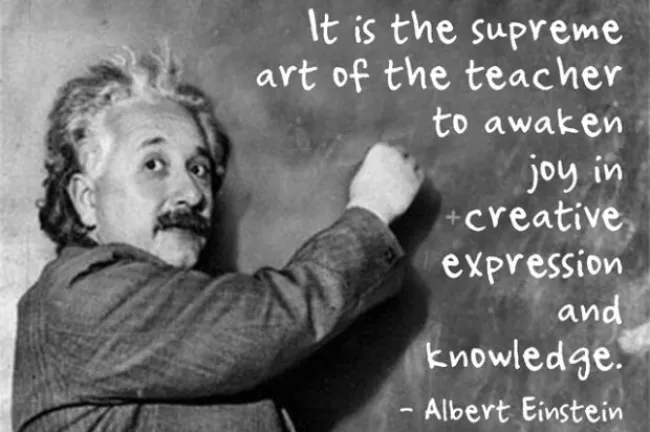
I have been on way too many courses with some of our profession's most highly qualified and educated individuals who have publications falling out of their arseholes, only to be bored shitless and confused witless due to their crappy presentation style, terrible explanations, and jumbled delivery.
Yet conversely, some of the best courses I have ever been on are with a clinician who simply has a clear passion and deep knowledge for the subject they are teaching and often very little, if any publications!
I know science!
To think that those without PhD qualifications or publications can not be adequately aware of the evidence, or can not understand scientific processes, is just qualification snobbery.
Of course, there are many clinicians hopelessly out of date and totally clueless about the current evidence, but conversely, there are many clinicians out there with a remarkable in-depth awareness and understanding of the evidence base and the scientific method that puts most academics to shame.
Qualifications and publications are no guarantee of knowledge, and many clinicians like myself choose not to gain further qualifications, not because we don't know stuff or can't understand science, but rather due to personal choices or other life events taking priority.
Finally, to think that having more qualifications makes a teacher less biased is deluded wishful thinking.
If anything, I often see it the other way round.
Many academics often have a greater bias due to their personal involvement in research. Most researchers often have invested and sacrificed a hell of a lot of time, energy, and expense into their research and qualifications, and this is to be commended.
But this effort does tend to skew their views and perspective due to the hardship this process took to achieve.
It is well known that those who work hard to achieve something tend to place a much greater emphasis on its importance than those who haven't (ref).
It is this phenomenon, in my opinion, that tends to make some academics exaggerate the importance of a particular area of interest of theirs and all too often I see academics promoting their own research without recognition of other work that challenges their own.
So what makes a good teacher?
Well, this is an age-old question and one that has been asked time and again right from the days of Aristotle and Plato.
There have been many disagreements on what the essential characteristics of a good teacher are, and many have tried to determine what separates those who are perceived as good educators from those who are not (ref).
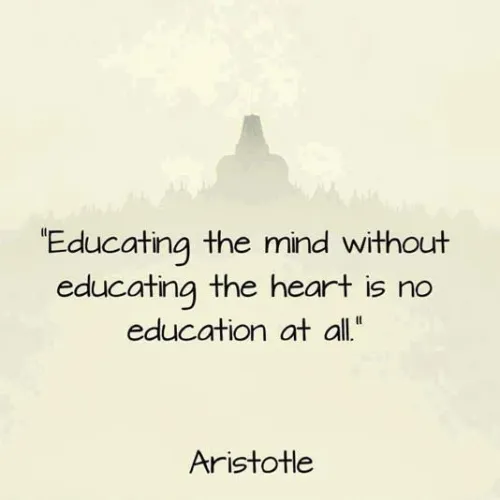
When you read around what makes a good teacher, there are many factors and qualities discussed; however, the number of qualifications and publications a teacher has is never one of them.
As mentioned, an in-depth knowledge of the subject is essential, but good teaching tends to be more about other factors and qualities other than knowledge alone.
I have broken down what I think makes a good teacher/educator into four key areas.
No 1: Passion
Having a strong passion for a subject and conveying that passion to others is what I truly think separates a good teacher from a bad one.
It's hard not to pay attention to and learn from someone who is talking passionately about a topic that they know a lot about, yet the exact opposite is true when someone is speaking with lethargy and disinterest.
Simply put, with no passion, there will be no learning.
No 2: Personality
A good teacher needs to have the right personality. In my opinion this is a mix of part nerd, part comedian, part Shakespearean actor.
Teaching is just like acting; having a theatrical ability helps impart knowledge greatly.
Being able to deliver a creative, imaginative and engaging learning experience is a skill and trait not all educators have.
Being able to take a subject and shape a learning experience that is unique and dynamic, that grabs attention and makes them wanting to come back for more is what makes a great teacher.
No 3: Respect
A great teacher does NOT see themselves on a higher pedestal than their students.
Although good teachers tend to be good leaders and naturally command respect, they do NOT achieve this through hierarchy, qualification snobbery, or appeals to authority.
A great teacher earns respect from others not just by demonstrating knowledge but also by leading by example that they can learn from others and can listen to other ideas and opinions, make balanced and rational arguments and discussions.
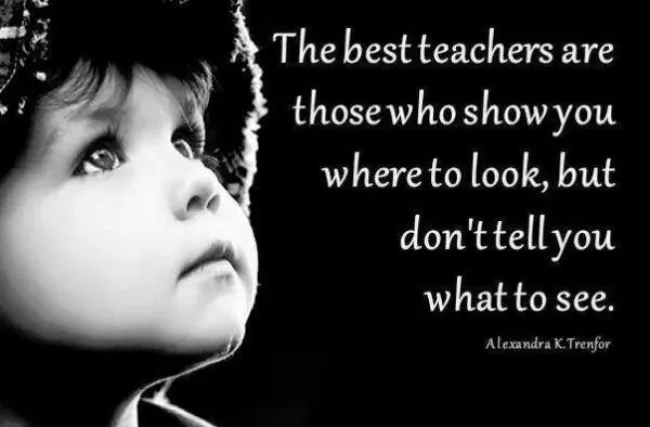
A good teacher ensures others feel safe to ask questions and explore ideas. A good teacher creates a relaxed and welcoming learning environment without imposing their own rhetoric and agenda
No 4: Fun
But at the end of the day, good teaching is about fun, both having it and making sure others are having it too.
Good teachers do it not because they have to, but because they want to. I bloody love teaching, I love the interaction, the opportunities, and the fun it gives me. I love meeting new people and learning from them; in fact, I often see my courses are just as much for me to learn from those attending as they are learning from me.
In summary, good teaching is as much about passion as it is about qualifications.
Sure, qualifications are important, but they are not sufficient to be a good teacher.
To be a good teacher, you have to be part stand-up comic, part salesman, part expert, part administrator, part counsellor.
Teaching is about motivating others to learn, but also guiding others on how to learn for themselves in a manner that is relevant, meaningful and memorable.
Good teaching is as much, if not more, about personality and performance as it is about publications and PowerPoint.
As always, thanks for reading
Adam
Stay connected with new blogs and updates!
Join my mailing list to receive the latest blogs and updates.
Don't worry, your information will not be shared.
I hate SPAM, so I promise I will never sell your information to any third party trying to sell you laser guided acupuncture needles or some other BS.
