
Are you perturbed?
Apr 05, 2016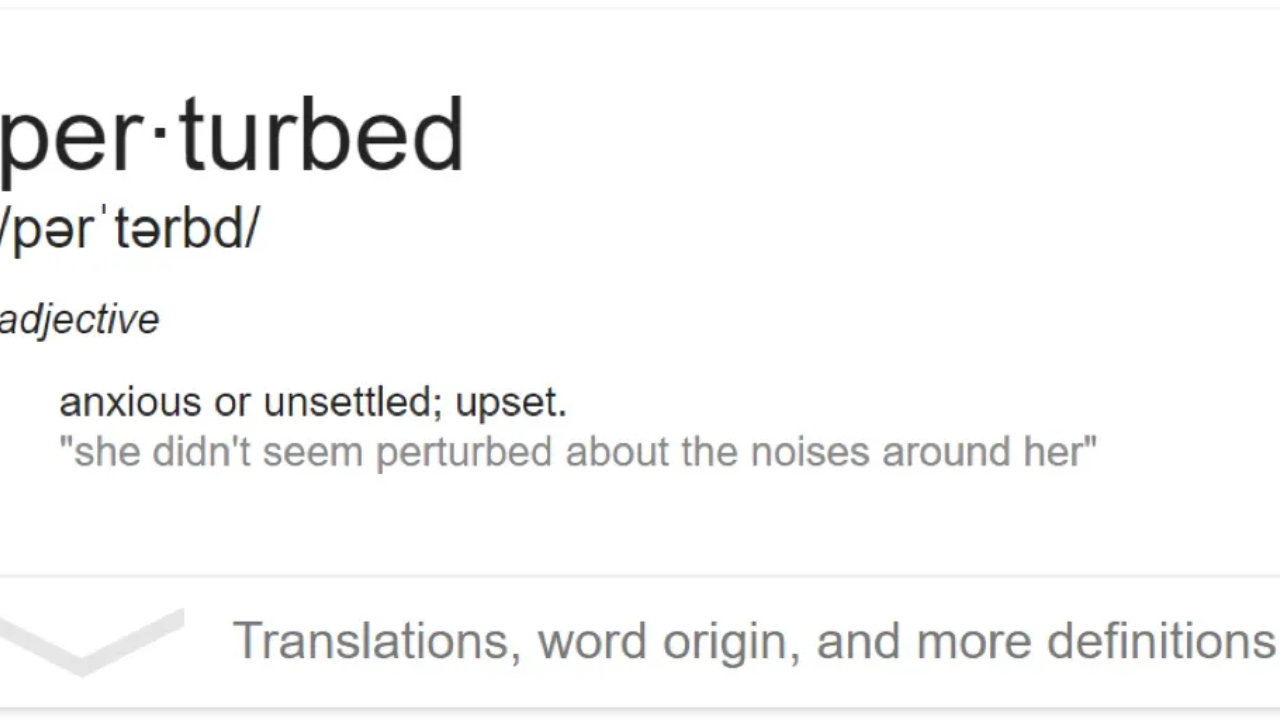
A 5-minute read
To be perturbed is described as being anxious, unsettled, or upset, and there is no doubt that some of my blogs have perturbed a few of you over the years; however, for once, that is not my intention with this one.
Perturbed also has another definition, that is to influence a subject or object so that it alters its normal or regular state and changes path or direction; it is this type of perturbation that I want to talk about.
You may, or may not be aware that I love working with the shoulder; I think it is a remarkable, exciting, yet challenging area. One such challenge is when a shoulder has suffered a loss of stability, either through trauma or other issues.
Restoring an individual's shoulder back to full function once it has dislocated, subluxed or just generally lost its sense of stability can be a challenge, both physically and psychologically.
However, returning a patient's shoulder mobility, strength and even control can often be the 'easy' part in rehab, but restoring an individual's faith, trust, and confidence into an area that has, or still is, causing them fear, apprehension, pain, and disability is far harder to achieve.
Whenever there is a lack of confidence or trust in anything, a graded and progressive exposure to novel, challenging, and even threatening tasks and stimuli is required over a period of time for adaptation and desensitisation to occur, again both physically and psychologically.
In fact, thanks to the recent Pain Science and Sensibility Podcast with Sandy Hilton and Cory Blickenstaff I have learnt that this may need to be done a little differently than I have been doing. Sandy and Cory discuss this paper here, where it seems the greater the exposure to an expected risk or threat the better the positive outcome is if it successfully challenges or violates the individual's perceived expectations, go listen to Sandy and Cory talk more on this here.
Anyway, back on track, a great way to achieve some graded exposure to perceived threat and risk for an unstable shoulder, I find, is with perturbations.
Perturbations are simply a therapist, or anyone else for that matter, applying external forces to a patient's arm or shoulder that they are not in control of, that try to offset, change direction, and alter the patient's shoulder's equilibrium.
Fancy stuff hey, but they are dead simple to do and apply, and there are a million and one ways they can be done. I discuss and demo a lot of these on my shoulder courses (shameless plug here).

me performing a version of open-chain shoulder perturbations on a recent course in Norway
Shoulder perturbations usually involve the therapist pushing, pulling, tapping or slapping a patient's arm or body in various directions, speeds, and forces, with the patient in various positions and in different levels of support and stability
I usually start with perturbations that are the least threatening and perceived as less risky for the patient and progress them as they become more confident; however, as I said earlier, after listening to Sandy and Cory's recent podcast, I may change this for some of my patients and violate their expectations a little more robustly.
Of course we still need to respect healing times, and forces applied to any post traumatic or surgically stabilised shoulder.
I usually start shoulder perturbations in a closed kinetic chain positions such as four point kneeling, I then apply the perturbations close to the shoulder joint or even to the torso, at a low intensity, rhythmically and regularly for about 10-20 seconds and repeat 3-4 times.
I progress this by increasing the intensity, changing the direction and regularity of the perturbations. I then progress by reducing the base of support as well as going from closed to open kinetic chain positions. I also like to progress by asking patients to close their eyes as this adds another level of unexpectedness and again can challenge their sensations of control and stability.
I also like to bias the direction of the perturbations depending of the direction of shoulder instability, targeting the portion of the rotator cuff that needs to work more to control humeral head displacement. However, I still often hear and see therapists getting this direction specificity of the rotator cuff completely 'arse about face'... that means wrong!
The rotator cuff does NOT act like a physical barrier to the humeral head, it does NOT contract against the humeral head to prevent its displacement. The rotator cuff actually contracts in the opposite direction of humeral head movement, think of a tug of war with the humeral head in the middle and the cuff pulling back on it. This direction specificity has been shown here and also here during perturbations.
So for anterior shoulder instability, it is the posterior cuff of the infraspinatus (and supraspinatus as they are conjoined) that contracts to prevent anterior displacement, internal rotation perturbations are better, and for posterior shoulder instability its subscapularis that contracts to prevent posterior humeral head displacement, and so external rotation perturbations are best.
So there you go, a quick little blog on the use of perturbations in the management of unstable shoulders.
Of course, there will be physical effects from doing them; in fact, they can be quite demanding and fatiguing when done at higher intensities and speeds, but the main benefits from this method, I feel, are psychological.
Perturbations can challenge perceptions and expectations of shoulder instability when factors are out of an individual's control, and when the expectations are challenged, the threat is reduced.
Get me... am I a physiotherapist or a pseudo psychologist?
As always thanks for reading
Adam
Stay connected with new blogs and updates!
Join my mailing list to receive the latest blogs and updates.
Don't worry, your information will not be shared.
I hate SPAM, so I promise I will never sell your information to any third party trying to sell you laser guided acupuncture needles or some other BS.
